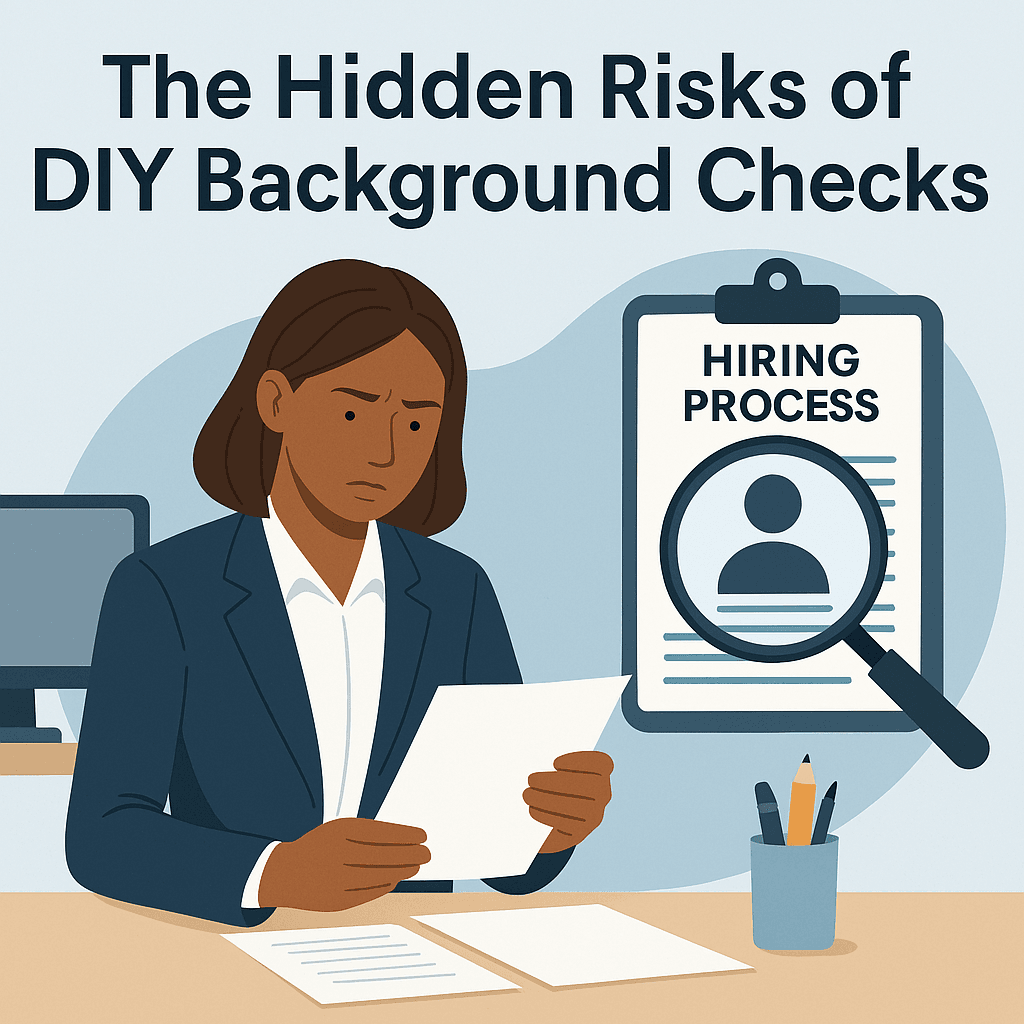
Hiring decisions require more than quick checks—discover the hidden risks of DIY background screenings.
Personal Background Check – Most people only think about background checks when an employer orders one — but reviewing your own background check report before a job search is one of the smartest steps you can take. Errors in background check reports are more common than most people realize, and an inaccuracy you don’t know about can cost you a job offer before you ever have a chance to address it. Here’s how to check your own background report and what to do if something is wrong.
Personal Background Check: Why You Should Check Your Own
Background check reports contain information compiled from public records, credit reporting databases, and employer-provided data — and the accuracy of that information depends entirely on the accuracy of the underlying sources. County court records may contain data entry errors. A name similar to yours may be associated with someone else’s criminal record. An employment verification may have incorrect dates because your former employer provided the wrong information to the verification service. None of this is your fault — but all of it will show up on the report an employer receives when they screen you.
Reviewing your own background before a job search gives you the opportunity to identify and dispute inaccuracies before they affect a hiring decision. Under the Fair Credit Reporting Act, you have the right to dispute inaccurate information in consumer reports, and the consumer reporting agency must investigate and correct confirmed errors. But disputes take time — sometimes 30 days or more — and initiating a dispute after you have already lost a job offer is far less useful than addressing the error beforehand.
Knowing what your background report contains also lets you prepare to address legitimate items proactively. If there is an old conviction, a gap in your employment history, or a negative credit item that you believe has a valid explanation, you can prepare a clear, honest explanation in advance rather than being caught off guard when an employer asks about it.
What Employers Actually See in Your Background Check
The scope of an employer background check depends on what the employer orders. A standard employment background check typically includes a criminal history search (at the county, state, and federal level), an employment history verification (confirming your previous job titles, dates of employment, and sometimes salary), and an education verification (confirming your claimed degrees and institutions). Some positions also trigger additional searches: credit history for financial roles, professional license verification for licensed positions, and driving record checks for positions requiring vehicle operation.
Employers do not typically see medical records, bankruptcy older than 10 years, arrests without convictions in most states, or records that have been expunged or sealed (though there are exceptions). Most background check reports are limited to information that is legally reportable under the FCRA and applicable state law — typically 7 years of non-conviction history and no age limit on convictions, though many states impose shorter lookback periods.
Social media and online presence are not part of a standard background check from a consumer reporting agency. Some employers conduct informal internet searches separately, but this is not a formal background check and is governed by different legal rules. A consumer reporting agency’s background check report focuses on verifiable records from official sources — not social media profiles.
How to Get a Copy of Your Own Background Report
The most accurate way to see what an employer will see is to request a background check on yourself from the same type of consumer reporting agency that employers use. Several major national background check providers allow individuals to request their own reports. These self-check reports are governed by the FCRA and use the same underlying data sources that employer-ordered reports draw from.
When requesting a self-check report, you will typically need to provide your full legal name, Social Security number, date of birth, and current and previous addresses. The report will generally include a criminal history search, sex offender registry check, and sometimes a credit component depending on the service. Costs for self-check reports range from approximately $30 to $100 depending on the provider and the comprehensiveness of the search.
If a specific employer has already ordered a background check on you and taken adverse action, you are entitled to a free copy of the report under the FCRA. The employer must provide you with a copy of the report as part of the pre-adverse action process. You can also contact the background check vendor whose name appears on the report and request a copy of your file directly.
Checking Your Credit Report
For positions that involve financial responsibilities, access to company funds, or handling client money, employers may order a credit history check as part of the background screening process. Under the FCRA, you are entitled to one free credit report per year from each of the three major credit bureaus — Equifax, Experian, and TransUnion — through .com. This is the only federally mandated free credit report source; other sites that advertise free reports may have subscription upsells or provide different products.
When reviewing your credit report before a job search, look for accounts that are not yours, incorrect payment history, debts that should have aged off your report (most negative items must be removed after 7 years, bankruptcies after 10 years), and any identity theft indicators. If you find errors, dispute them directly with the credit bureau and with the creditor who furnished the incorrect information. The bureau must investigate within 30 days and correct confirmed errors.
Be aware that employment credit checks show a modified version of your credit report — not your credit score. Employers see credit history and public records, but not your score. Many states also restrict or prohibit employment credit checks for positions that are not financial in nature. Check your state’s laws to understand when an employer may legally use credit history as a screening factor.
Checking Your Criminal History Records
Criminal history records are maintained at the county, state, and federal levels, and a comprehensive employer background check typically searches all three. The easiest way to check your own criminal history is to request a criminal background check on yourself through a reputable consumer reporting agency. This will typically search national criminal databases and, for a more thorough search, individual county court records in counties where you have lived.
You can also request your own records from state repositories in many states. Some states allow individuals to request their own state criminal history records directly from the state police or department of justice, either in person or by mail. These official state records reflect what law enforcement agencies maintain and can be more reliable than commercial database searches for your state of residence.
If you have a record that you believe was expunged or sealed, verify the expungement or sealing through the court where it was processed before assuming it will not appear on a background check. Some commercial databases are slow to remove expunged records, and even after an expungement is granted, it may take time for all sources to update. If an expunged record appears on a background check report, you can dispute it with the consumer reporting agency and provide the expungement order as documentation.
Common Background Check Errors and How They Happen
Mixed files are among the most damaging background check errors. A mixed file occurs when the consumer reporting agency associates someone else’s criminal record, debt, or employment history with your profile — typically because of similar names, shared addresses, or Social Security number transpositions. Mixed files are more common for people with common names and can be extremely difficult to untangle once they appear in a report.
Employment history errors often come from former employers who provide incorrect start or end dates, misremember job titles, or provide information through automated HR systems that contain stale data. If a former employer was acquired, merged, or went out of business, their records may be held by a third party who maintains incomplete information. Always verify what each of your former employers will say about your employment before a job search begins.
Outdated records are another common source of errors. Records that should have aged off a report under FCRA or state law rules sometimes remain because the consumer reporting agency’s systems did not properly flag and remove them. This is particularly common for collections accounts and civil judgments. If you see an item that you believe is too old to be reported, dispute it with the consumer reporting agency and cite the applicable FCRA or state law provision.
How to Dispute Errors in a Background Check Report
Under the FCRA, you have the right to dispute any information in a consumer report that you believe is inaccurate, incomplete, or unverifiable. To initiate a dispute, contact the consumer reporting agency that issued the report in writing — either online through their dispute portal r by certified mail. Provide your identifying information, describe the item you are disputing, explain why it is inaccurate, and include any supporting documentation (court records, employment letters, proof of payment, etc.) that supports your dispute.
The consumer reporting agency must investigate your dispute within 30 days (45 days if you submitted additional information). They must contact the source of the information — the county court, former employer, or creditor — and ask them to verify the data. If the source cannot verify the information, the consumer reporting agency must delete or correct it. You have the right to a free copy of the revised report after a dispute is resolved.
If the dispute is not resolved in your favor and you believe the consumer reporting agency’s conclusion was incorrect, you can add a brief statement of dispute to your file (up to 100 words), which will be included in future reports to potential employers. You can also consult a consumer protection attorney, as willful or negligent FCRA violations by consumer reporting agencies are actionable in federal court.
Frequently Asked Questions
Can I get a free copy of my own background check?
You are entitled to a free copy of your consumer report from any consumer reporting agency once per year under the FCRA. Additionally, if an employer orders a background check on you and takes adverse action, they must provide you with a free copy of the report as part of the pre-adverse action process. Self-check background checks ordered proactively through commercial providers typically cost $30–$100.
Will checking my own background report affect my credit score or employment prospects?
No. Self-initiated checks of your own background report or credit report are classified as “soft inquiries” and do not affect your credit score. They also have no impact on any employer background checks — employer-ordered background checks are separate transactions that do not reference or affect self-checks.
How far back does a background check go?
Under the FCRA, most non-conviction records and adverse credit items cannot be reported beyond 7 years. Convictions can generally be reported indefinitely under federal law, though many states impose shorter lookback periods. The actual lookback period for any specific check depends on the employer’s instructions to the background check vendor and the applicable state law for the position’s location.
If I have an expunged record, will it still appear on a background check?
In most cases, expunged records should not appear on background check reports from consumer reporting agencies. However, expungements take time to propagate through databases, and some commercial criminal databases update slowly. If an expunged record appears on a background check, dispute it with the consumer reporting agency and provide the expungement order. Most agencies will remove the record promptly upon receiving court documentation.
What should I do if an employer’s background check report contains an error?
Under the FCRA’s pre-adverse action process, the employer must provide you with a copy of the report and a reasonable opportunity to respond before taking final adverse action. Use this opportunity to dispute the specific inaccuracy directly with the consumer reporting agency and inform the employer of the dispute. Provide any documentation that supports your dispute. If the error is corrected and the corrected report removes the basis for the adverse action, the employer should reconsider their decision.
Employers: Build a Compliant Screening Program
For employers, the accuracy of background check reports — and the fairness of the process used to act on them — is a legal obligation, not just a courtesy. Building a screening program that uses FCRA-compliant procedures, provides candidates with appropriate notices and dispute opportunities, and follows state-specific requirements protects your organization and produces more accurate hiring decisions.
Get started with Vertical Identity and learn how our employment background screening services keep your hiring process legally sound and your candidates treated fairly.
Frequently Asked Questions About Personal Background Check
What is a Personal Background Check?
A personal background check is a comprehensive review of your public records and personal history. This Personal Background Check process helps identify any inaccuracies or red flags that might affect your employment or housing opportunities.
How Often Should I Run a Personal Background Check?
We recommend running a personal background check at least once annually. A regular personal background check ensures you catch any errors or fraudulent activity quickly and can dispute them with the relevant agencies.
Can I Fix Errors in My Personal Background Check Results?
Yes! If you find errors in your personal background check report, you have the right to dispute them. Contact the reporting agency and provide documentation to support your dispute. Most errors in a personal background check can be corrected within 30-60 days.
Will a Personal Background Check Affect My Credit Score?
A personal background check does not directly affect your credit score. However, if the check reveals negative information like liens or judgments, those could impact your credit if they’re not already reported.
Where Can I Get My Personal Background Check Results?
You can obtain your personal background check through various online services or directly from the Consumer Reporting Agencies. Many services now offer free personal background check reports annually.