
As an employee, it is important to understand your rights and legal considerations when it comes to random drug testing in the workplace. Random drug tests are often conducted to ensure a safe and drug-free environment and to comply with certain regulations. However, you may wonder if you have the right to refuse a random drug test. In this article, we will explore the topic of random drug tests, the rights and legal considerations involved, the consequences of refusing a test, and what to do if you want to refuse a random drug test.
Understanding Random Drug Tests
Random drug tests are a common practice in many industries, especially those that involve safety-sensitive positions such as transportation, healthcare, and law enforcement. These tests are conducted without prior notice and are designed to detect the presence of drugs or alcohol in an employee’s system. The goal is to deter drug use in the workplace and ensure the safety of both employees and the general public.
Rights and Legal Considerations Regarding Drug Testing
While random drug testing is widely accepted in many industries, it is important to understand your rights as an employee. The laws regarding drug testing can vary depending on your country, state, or industry. In general, employers have the right to request drug tests as a condition of employment. However, there are certain legal considerations that employers must adhere to when conducting random drug tests.
For example, employers may need to have a written drug testing policy that outlines the testing procedures, the types of tests that will be conducted, and the consequences of positive test results. Additionally, employers may be required to provide employees with information about their rights and responsibilities regarding drug testing.
Can You Refuse a Random Drug Test?

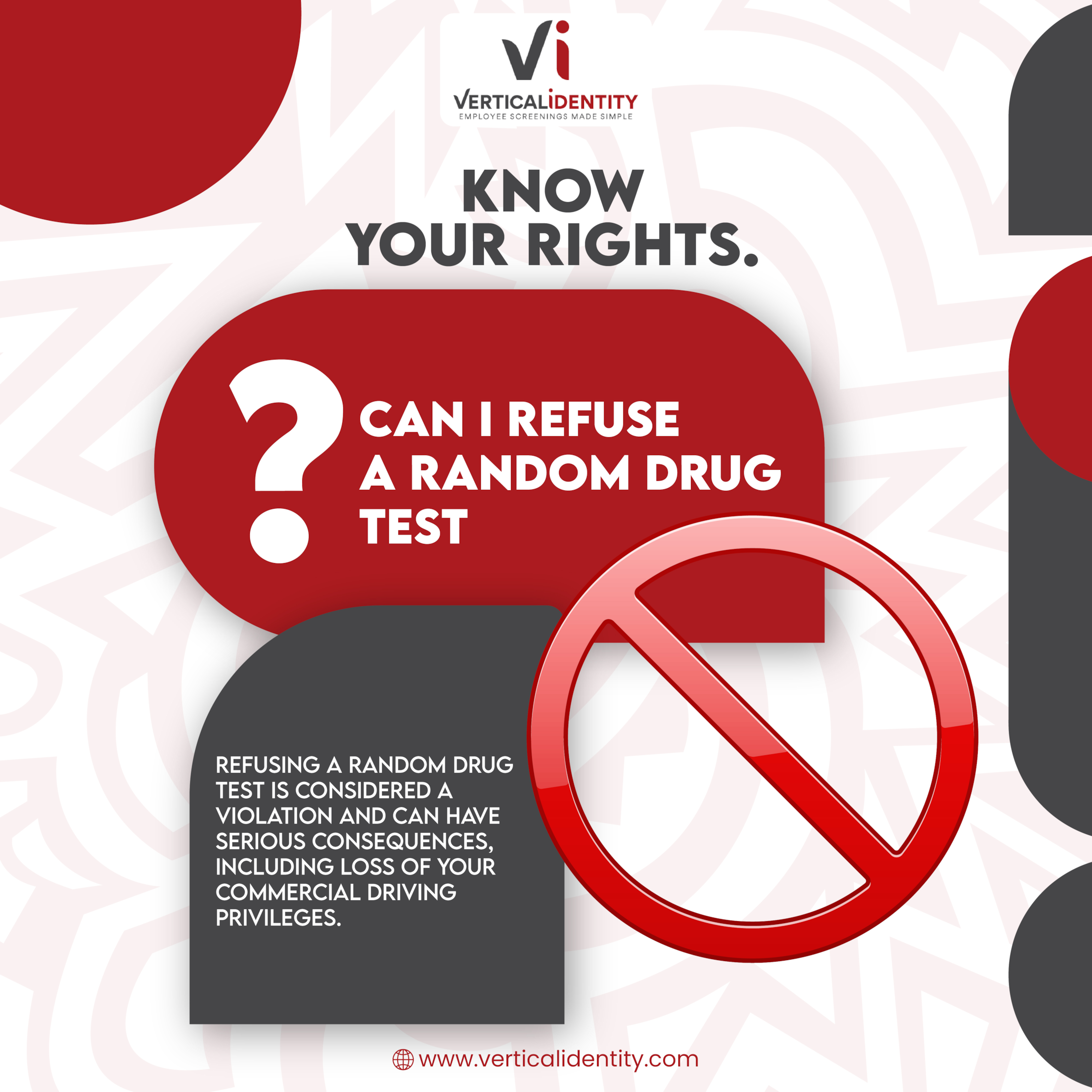
While you may have concerns about random drug testing, refusing a random drug test is generally considered a violation and can have serious consequences. Suppose you refuse to take a random drug test. In that case, your employer may consider it to be a positive test result, which could lead to disciplinary actions or even termination of employment. In some industries, such as commercial driving, refusing a random drug test can result in the loss of your commercial driving privileges.
It is important to weigh the potential consequences of refusing a random drug test against your concerns about privacy or other factors. If you have specific concerns or objections to drug testing, addressing them through proper channels rather than refusing the test outright is advisable.
What to Do If You Want to Refuse a Random Drug Test
If you have concerns about a random drug test and are considering refusing it, it is important to approach the situation carefully and professionally. Rather than outright refusing the test, consider discussing your concerns with your employer or the appropriate HR representative.
Express your concerns about privacy, the reliability of the testing process, or any other legitimate reasons you may have. Your employer may be willing to address your concerns or accommodate your needs within the boundaries of the law and company policy.
Alternative Options for Addressing Drug Testing Concerns
If you have concerns about random drug testing but do not want to refuse the test outright, alternative options may be available to address your concerns. You can consider discussing the possibility of a different testing method, such as a hair follicle test or a saliva test, which may provide a longer detection window and a more accurate representation of drug use.
Additionally, you can obtain legal advice to better understand your rights and responsibilities regarding drug testing. An employment law attorney can guide you and help you navigate the legal considerations surrounding drug testing in your specific industry or jurisdiction.
Tips for Navigating Random Drug Testing in the Workplace
If you find yourself subject to random drug testing in the workplace, several tips can help you navigate the process:
- Familiarize yourself with your company’s drug testing policy to understand your rights and responsibilities.
- Stay informed about the legal considerations and regulations regarding drug testing in your industry or jurisdiction.
- Maintain a drug-free lifestyle to avoid any potential complications or negative consequences.
- Address any concerns or objections you may have through proper channels, such as discussing them with your employer or seeking legal advice.
- Understand the potential consequences of refusing a random drug test and weigh them against your concerns about privacy or other factors.
By being proactive and informed, you can navigate the process of random drug testing in the workplace more effectively.
Conclusion and Final Thoughts on Refusing Random Drug Tests
While it may be tempting to refuse a random drug test, it is important to understand the potential consequences and consider alternative options for addressing your concerns. Refusing a random drug test can seriously affect your career and professional reputation. It is advisable to approach the situation carefully, express your concerns, and explore alternative solutions that may accommodate your needs while complying with company policies and legal requirements.
Remember to familiarize yourself with your company’s drug testing policy, stay informed about the legal considerations, and maintain a drug-free lifestyle to ensure a smooth experience with random drug testing in the workplace. By doing so, you can protect your rights and maintain a professional reputation while promoting a safe and drug-free work environment.
Frequently Asked Questions About Refusing Random Drug Tests
What happens if I refuse a DOT random drug test?
Refusing a DOT random test is treated as a positive result. You’ll be immediately removed from safety-sensitive duties, the refusal is reported to the DOT Clearinghouse, and you must complete the return-to-duty process before resuming driving.
What counts as a refusal to test?
Refusals include explicitly declining, failing to appear after notification, leaving before completion, failing to provide adequate specimen, tampering with or substituting a specimen, and refusing to sign required forms. All are treated the same as positive results under FMCSA regulations.
Can I refuse a non-DOT employer drug test?
You can refuse non-DOT tests, but consequences depend on employer policy and state law. Most employers treat refusal as grounds for termination or withdrawal of a job offer. Some states limit testing circumstances, so consulting compliance experts is advisable.
How long does a refusal stay on record?
DOT refusals remain in the Clearinghouse for 5 years from the date of determination or until the return-to-duty process is completed, whichever is later. Incomplete RTD processes result in indefinite violation status.
Can I get my CDL back after refusing a test?
Yes, but you must complete the return-to-duty process including SAP evaluation, recommended treatment, return-to-duty test with negative results, and follow-up testing. Compliance services can guide you through this process.